
WELCOME BONUS 300%
UP TO €2000 + 100
FREE SPINS
UP TO €2000 + 100
FREE SPINS
Home → Blackjack
Blackjack at Gratorama: Variants, Rules and Payouts
Bonus conditions often exclude Blackjack completely
The 300% welcome bonus up to €2,000 plus 100 free spins comes with specific wagering requirements. These conditions often stipulate that table games, including all variants of Blackjack, contribute only 10% towards the wagering. This means players need to wager significantly more on Blackjack to clear the bonus compared to slots.
For instance, to wager a €1,000 bonus amount that is subject to a 40x wagering requirement, a player would need to wager €40,000 on slots (100% contribution). However, if playing Blackjack, which contributes only 10%, the required wagering amount escalates to €400,000 (€1,000 bonus x 40 wagering requirement / 0.10 contribution rate).
This substantial difference in wagering contribution means that players focused on Blackjack may find it impractical to meet the bonus turnover requirements. The bonus terms, therefore, effectively steer players towards slot games if they wish to fulfil the conditions within a reasonable timeframe or budget. Other games like Blackjack Insurance, with an RTP of 92.53%, would also have this reduced contribution.
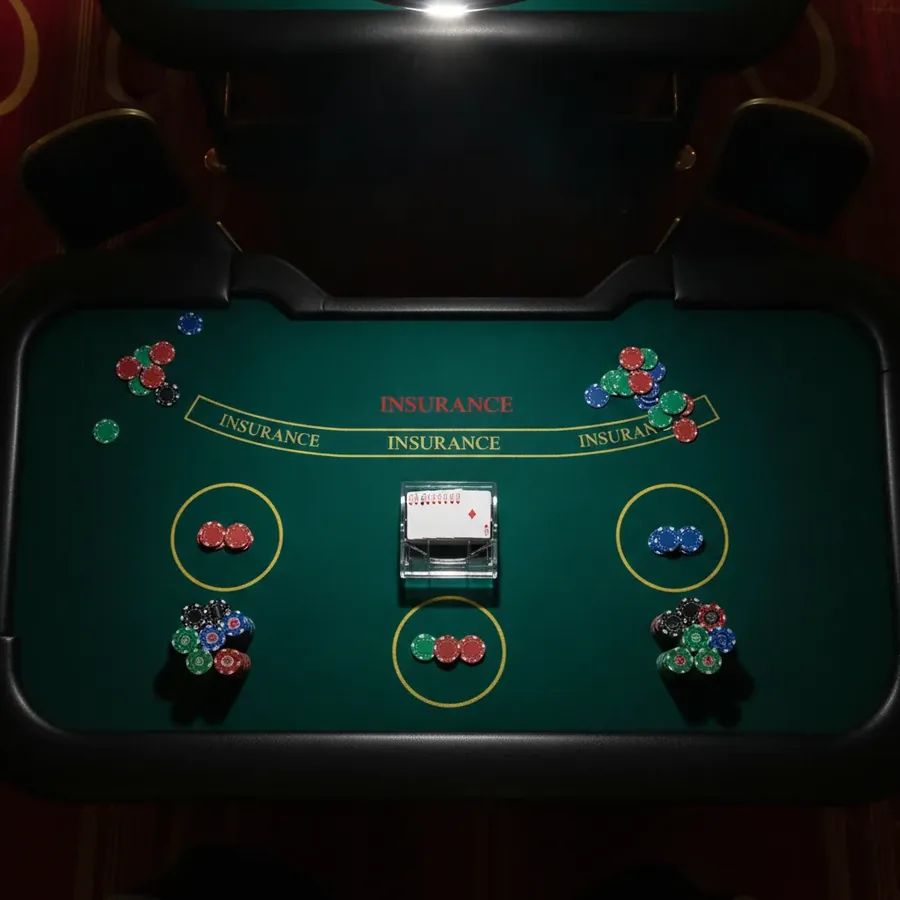
Place Side Bet before cards are dealt
Certain Blackjack variants at Gratorama Casino offer optional side bets that can be placed before the main hand is dealt. For example, the Infinite Blackjack table from Evolution allows for four different side bets: Any Pair, 21+3, Hot 3, and Bust It. These wagers introduce additional betting opportunities beyond the standard game.
To participate in these side bets, players must place their wager on the designated area of the table before the dealer commences the hand. For the Infinite Blackjack game, the betting limits for the main hand range from €1 to €5,000, and these limits typically apply to the side bets as well. Players must adhere to these limits when placing their side bets.
It is crucial to understand the payout structure and odds of each side bet before placing them. For instance, the Insurance side bet in traditional Blackjack pays 2:1, but it is generally advised against due to its high house edge of 7.47% (with 6-8 decks). Players should research the specific side bets offered at each table to make informed decisions about their wagers.
Chose Wrong Table for 5 EUR Bankroll
When managing a limited bankroll of €5, selecting the correct Blackjack table is paramount to ensure extended gameplay. Many live Blackjack tables at Gratorama Casino, such as Quantum Blackjack Plus Live by Playtech, have a minimum bet of €1 and a maximum bet of €5,000. While €1 is accessible, higher minimums on other tables can quickly deplete a small bankroll.
Consider a scenario where a player with a €5 bankroll chooses a table with a minimum bet of €5 per hand. After just one hand, their entire bankroll would be wagered, leaving no room for subsequent plays or recovery. This highlights the importance of checking the minimum bet before joining any game, especially with a restricted budget.
For a €5 bankroll, it would be more prudent to opt for tables with a minimum bet of €1, such as those found on Infinite Blackjack or Lightning Blackjack, both offered by Evolution. This allows for a minimum of five hands, providing more opportunities to experience the game and potentially achieve a win, as opposed to a single hand on a higher-stakes table.
Unlimited seats via a split dealer hand
Live Blackjack variants like Infinite Blackjack by Evolution offer an unlimited number of seats for players, circumventing the traditional table capacity limits. This is achieved by dealing each player their own two cards, irrespective of the number of people playing. This innovative approach ensures that no player is ever turned away due to a full table.
The concept of splitting a dealer's hand is not directly applicable to the 'unlimited seats' feature in the same way it applies to player actions. However, the ability to Resplit Aces (RSA) is a rule modifier that can be found in some Blackjack variants. Resplitting Aces can improve the RTP by approximately 0.08 percentage points when allowed.
While not directly related to splitting dealer hands, the availability of unlimited seats on games like Infinite Blackjack and Lightning Blackjack means players can always join the action. This contrasts with traditional Blackjack tables, which may have limited spots and can lead to players waiting to join, particularly during peak times. The RTP for Infinite Blackjack is listed at 99.47%.
Blackjack Contributes Only 10 Percent to Wagering
The welcome bonus at Gratorama Casino, offering 300% up to €2,000 plus 100 free spins, comes with wagering requirements that significantly impact Blackjack gameplay. Specifically, Blackjack games contribute only 10% towards meeting these wagering conditions. This means that for every €1 wagered on Blackjack, only €0.10 counts towards clearing the bonus.
To illustrate, consider the wagering requirement of x40. If a player claims the maximum €2,000 bonus, they would need to wager €80,000 on slots (100% contribution rate) to fulfil the requirement. However, playing Blackjack, the same €2,000 bonus would necessitate a total wager of €800,000 (€2,000 x 40 / 0.10 contribution rate).
This low contribution rate makes it considerably more challenging and time-consuming for Blackjack enthusiasts to convert bonus funds into withdrawable cash. Players who primarily enjoy Blackjack are therefore advised to review the bonus terms carefully, as the 10% contribution may render the bonus impractical for their preferred gaming style compared to slot games where the contribution is 100%.
Blackjack variants at a glance
| Variant | Payout | House edge | Rule | Bet range |
|---|---|---|---|---|
| Blackjack Ein Deck, klassische Regeln, 3:2 | 99.85% | 0.15% | Weniger Decks = niedrigerer Vorteil; ein Deck gibt ca. −0.48 Prozentpunkte gegenüber 8 Decks. Oft durch 6:5 Auszahlung kompensiert. | Blackjack 3:2, Gewinn 1:1 |
| Blackjack Split / Double / H17 – Regel-Effekte | n.a. (Regel-Modifikatoren) | H17 +0.22 Prozentpunkte; RSA −0.08 Prozentpunkte; DAS −0.14 Prozentpunkte | Dealer Hits Soft 17 verschlechtert RTP um 0.22 Prozentpunkte; Resplit Aces verbessert um 0.08 Prozentpunkte; Double After Split verbessert um ca. 0.14 Prozentpunkte; 6 Decks statt 8 – ca. 0.02 Prozentpunkte. | Double – Einsatz ×2 mit einer Karte; Split – bis 4 Hände; Ass-Split meist mit einer Karte. |
| Blackjack Surrender (Late Surrender) – Regel-Effekt | n.a. (Regel-Modifikator) | −0.08 Prozentpunkte | Spieler gibt Hand nach Dealer-Blackjack-Prüfung auf, verliert die Hälfte des Einsatzes. Verbessert RTP um ca. 0.08 Prozentpunkte. Early Surrender ist wesentlich wertvoller (bis −0.6 Prozentpunkte), aber extrem selten. | Rückzahlung 50% des Einsatzes |
| Blackjack Liberal Vegas Strip (liberale Regeln, 3:2) | 99.72% | 0.28% | Günstigste Regelkombination: S17 + DAS + Resplit + Late Surrender. Standardabweichung 1,15 | Blackjack 3:2, Gewinn 1:1 |
| Blackjack Insurance / Versicherung (6–8 Decks) | 92.53% | 7.47% | Separate Nebenwette bis 50% der Hauptwette, wenn der Dealer ein Ass hat. Basisstrategie schreibt IMMER Ablehnung vor (außer Karten zählen bei True Count ≥ +3). Bei einem Deck Vorteil ≈ 5.88% | Insurance 2:1 |
| Blackjack 6 Decks, S17, DAS, DOA, Auszahlung 3:2, Basisstrategie | 99.54% | 0.46% | Dealer steht auf Soft 17; Verdopplung auf jeder Zweierkarte; Verdopplung nach Split erlaubt; keine Aufgabe. Basisstrategie ist für diesen Wert zwingend | Blackjack 3:2, normaler Gewinn 1:1, Insurance 2:1 |
Soft Hand and Hard Hand Practically Distinguished
A soft hand in Blackjack refers to a hand that contains an Ace, which can be counted as either 1 or 11. For example, an Ace and a 6 can be a soft 17 (1 + 6) or a soft 7 (11 + 6). This flexibility allows players to make decisions that might otherwise be too risky.
In contrast, a hard hand is a hand where an Ace must be counted as 1, or a hand with no Aces at all. For instance, a 10 and a 7 is always a hard 17. This distinction is crucial for understanding basic strategy, especially when the dealer shows a soft hand.
Understanding the difference between soft and hard hands is fundamental for mobile players. Games like Blackjack Liberal Vegas Strip, with an RTP of 99.72%, offer the best conditions when players can leverage the Ace's dual value to their advantage, particularly when facing dealer totals.
What doesn't count as Blackjack after Split?
When a player splits their hand in Blackjack, the resulting two hands are treated as separate entities. If one of these split hands forms a total of 21 with two cards (e.g., an Ace and a 10-value card), it is not considered a natural Blackjack in most rule sets. This distinction is critical for payout calculations.
The rule that a natural Blackjack can only be achieved with the initial two cards dealt before any split action is a common one across many Blackjack variants, including those available on mobile platforms. This means a 21 achieved after a split typically pays out at standard hand odds, not the special Blackjack bonus.
For example, in Blackjack 6 Decks, where a natural Blackjack pays 3:2 and the RTP is 99.54%, a 21 formed after a split would be paid at a 1:1 rate, significantly reducing the potential winnings compared to an initial Blackjack. This makes the decision to split a key strategic element.
Insurance vs Even Money on Own Blackjack
Insurance is a side bet offered when the dealer's upcard is an Ace, allowing players to bet on whether the dealer has Blackjack. This bet pays 2:1 if the dealer has Blackjack. However, Blackjack Insurance has a high house advantage of 7.47% for 6-8 decks, making it generally unfavorable according to basic strategy.
Even Money is a specific option available to a player who has a Blackjack when the dealer shows an Ace. Instead of waiting to see if the dealer has Blackjack, the player can accept an immediate payout of 1:1 on their Blackjack, regardless of the dealer's hand. This differs from the standard 3:2 payout for a Blackjack.
While both options involve the dealer having an Ace, Insurance is a separate bet on the dealer's hand, whereas Even Money is a decision related to the player's own Blackjack. For mobile players, choosing Even Money on a natural Blackjack provides certainty, but it forfeits the potential 3:2 payout if the dealer does not have Blackjack.
Bust at 22: Stake Lost Immediately
In most standard Blackjack games, a player 'busts' and loses their stake if their hand total exceeds 21. This rule is universal across variations, including those accessible on mobile devices. The objective is to reach a hand total as close to 21 as possible without going over.
The immediate loss of the stake when a player's hand exceeds 21 is a fundamental aspect of Blackjack strategy. This applies whether the player hits or doubles down. For example, if a player has 16 and draws a 6, their hand becomes 22, resulting in an automatic loss of their bet.
This immediate loss at 22 is a significant contributor to the house edge. For instance, in Blackjack 6 Decks with an RTP of 99.54%, the house advantage accounts for the probability of players busting. Mobile players must be mindful of this rule when deciding to hit on higher totals.
Even Money only possible with Dealer Ace
The option for 'Even Money' in Blackjack is exclusively available when a player is dealt a natural Blackjack (a total of 21 with their first two cards) and the dealer's upcard is an Ace. This specific condition is a standard rule in most Blackjack variants, including those optimized for mobile play.
When a player has a Blackjack and the dealer shows an Ace, they are presented with a choice: take an Even Money payout of 1:1 on their Blackjack, or decline it and proceed with the hand, risking a push if the dealer also has Blackjack. The standard Blackjack payout is 3:2.
This rule highlights the strategic importance of the dealer's upcard. For mobile players, understanding that Even Money is tied directly to the dealer's Ace simplifies decision-making in this particular scenario, ensuring they do not miss this limited opportunity for a guaranteed payout.
Splitting Eights vs Standing on 16
Splitting eights is a strategic move in blackjack, particularly when facing a dealer's upcard of 10 or an Ace. The underlying principle is to break down a hand of 16, which is statistically a poor total to stand on. By splitting the eights, players create two potentially stronger hands, aiming to improve their overall outcome against the dealer. This maneuver is a core component of basic strategy in many blackjack variants.
Standing on a total of 16, especially against a dealer's strong upcard, often results in a loss. The goal of blackjack strategy is to maximize winnings by making optimal decisions on each hand. Splitting eights aims to avoid the common pitfall of being dealt a low card on a 16, which would result in an even weaker hand. This tactical choice directly addresses the house edge.
While specific RTP figures for splitting eights are tied to the overall rules of the game, the decision itself is designed to mitigate risk. For example, in a game with a standard 6-deck shoe, the house edge can be influenced by such strategic plays. Failing to split eights can lead to a higher effective house edge over time.
RNG draws cards from virtual eight-deck shoe
The Random Number Generator (RNG) at Gratorama employs a virtual eight-deck shoe for its blackjack games. This setup mimics the physical process of shuffling and dealing multiple decks of cards. The use of an eight-deck shoe is a common practice in many online casino blackjack offerings, influencing the probabilities of card distributions.
Having an eight-deck shoe means that the probability of drawing specific cards changes less frequently compared to a single-deck game. For instance, variations like 'Blackjack Split / Double / H17' may specify rule effects. The house advantage can be calculated based on these deck configurations, with adjustments for specific rules.
The presence of an eight-deck shoe impacts the game's dynamics and the effectiveness of certain strategies. While not explicitly stated for every variant, the general house advantage in a standard eight-deck game is considered. Players should be aware that rule modifications, like 'Dealer Hits Soft 17', can alter the RTP by approximately 0.22 percentage points.
Live Table vs RNG Table: Speed and Limits
Live dealer blackjack tables, such as Infinite Blackjack by Evolution, offer a distinct playing experience compared to RNG-based games. Infinite Blackjack allows an unlimited number of players, with betting limits ranging from €1 to €5,000. This format aims to replicate the feel of a physical casino, albeit with potentially faster gameplay due to the unlimited seating.
RNG tables typically operate at a faster pace as they do not require a live dealer to manage the game. For example, while a game like 'Blackjack 6 Decks, S17, DAS, DOA, Auszahlung 3:2, Basisstrategie' might have specific betting limits, the speed of dealing is often quicker. This allows for more hands to be played within a given timeframe.
The speed difference can impact how quickly players reach wagering requirements if playing with a bonus. For instance, if a welcome bonus of 300% up to €2,000 requires 40x turnover, playing on a faster RNG table means that €4,000 of turnover can potentially be achieved more rapidly than at a live table where hands are dealt more deliberately.
Stand-on-17 Rule and Its Meaning for Players
The 'Stand-on-17' rule, often designated as S17, dictates that the dealer must stand on any hand totaling 17 or more. This rule is a fundamental aspect of blackjack strategy and directly influences the house edge. In games where the dealer stands on soft 17 (S17), the house advantage is generally lower compared to games where the dealer hits soft 17 (H17).
For players, the S17 rule is beneficial as it reduces the dealer's opportunities to improve their hand. When the dealer hits a soft 17, there's a chance they will draw a card that results in a bust or a less favorable total. Conversely, if the dealer stands, their hand remains static, allowing players to strategize based on that fixed total.
In the context of blackjack variants, a game with 'S17' alongside rules like 'DAS' (Double After Split) and 'DOA' (Double on Any two cards) can offer a lower house edge. For instance, 'Blackjack 6 Decks, S17, DAS, DOA, Auszahlung 3:2, Basisstrategie' has a house advantage of 0.46%, demonstrating the positive impact of favorable rules for the player.
What Hole Card Means at a Live Table
At a live blackjack table, the dealer's 'hole card' is the card dealt face down. Its identity is crucial for players making decisions, especially when the dealer's upcard is an Ace or a 10-value card. The possibility of the dealer having a blackjack (21) is directly linked to the value of this hidden card.
The presence of a hole card introduces strategic considerations like insurance bets. If the dealer's upcard is an Ace, players may be offered insurance, a side bet that pays 2:1 if the dealer has blackjack. However, for a typical 6-8 deck game, the RTP for insurance is 92.53%, making it a statistically unfavorable bet for most players.
Understanding the implications of the hole card is fundamental to basic strategy. For example, if the dealer shows a 10-value card and the hole card is an Ace, it's a blackjack. This is why many blackjack variants, such as 'Blackjack Split / Double / H17', have specific rules and payouts designed to account for the dealer's potential holdings.
Contact
Live - online chat
Banking









Providers












Gratorama Casino 2026